























Recent months have reinforced the case for accelerating action on the energy transition and climate, particularly from a European perspective.
Let’s list the reasons why:
- this summer has been like no other in Europe, with five major heatwaves across the continent and provisional data from the UK Met Office showing temperatures in London approximately 4°C above the long-term baseline average (1991-2020);
- internationally, 2026 has been marked by a series of extreme weather events, from the tragic landslide in Nepal caused by a melting glacier to a deadly winter storm bringing widespread fatalities across North America;
- all this against the backdrop of a super El Niño likely to generate even more extreme weather across the globe in the coming months;
- growing recognition, reflected in UK Energy Security and Net Zero Secretary of State Miatta Fahnbulleh’s warning that the war in Iran and closure of the Strait of Hormuz have shown how exposure to global fossil fuel markets raises energy costs;
- the war has also led to an explosion in electric vehicle sales, particularly in Asia. Across the first half of 2026, electric car sales in Europe grew around 35-40% compared with the same period in 2025; in the UK it’s up about 25% over the same period;
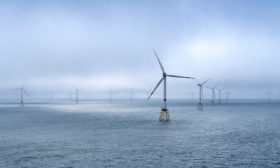
- according to WindEurope, Europe installed 8.8GW in the first half of 2026, a 30% increase on H1 2025. Renewables provided 53.1% of electricity generated by the UK’s Major Power Producers between March and May, with renewable generation up 22% year on year.;
- a breakthrough on the costs of energy storage, with global benchmark costs for four-hour battery storage projects falling by 27% year-on-year in 2025.
On the face of it, the case for accelerating the transition has never been stronger. But despite this, the state of multilateral action on climate change can probably be summed up by the collective shrug in response to the Climate Summit convened by the outgoing UN Secretary-General in New York on 23 September. In his final UNGA week, Antonio Guterres again argued that fossil fuel expansion “defies science, economics and common sense”. In language reflecting an increasing sense of alarm and urgency, he talked about this being the last generation “who can avert climate catastrophe”.
The weakened state of climate multilateralism is often attributed to a geopolitical environment in which political consensus has fractured and climate science is more openly challenged. This is evident not only in North America but in several European countries. But are there still opportunities this autumn for the pendulum to swing back towards concerted policy action that reflects the favourable platform that science, technology and economics are providing?
All roads on climate tend to lead to the COP, which this year will meet in Antalya, Turkey, from 9-20 November. COP31 will feature an unusual co-hosting arrangement between Turkey and Australia, alongside a pre-COP meeting hosted by Fiji and Tuvalu from 5-8 October. Crucially, the Pacific gathering will give small island states a platform to highlight the existential threat posed by climate change.
As for COP31 itself, the co-hosts face the challenge of providing a central focus for a COP where no single major negotiated decision is expected and which is being described as an “implementation COP”. But two key themes are emerging:
- a “35 by 35” global electrification target, designed to accelerate the transition by increasing the share of global final energy demand met by electricity to 35% by 2035, up from the present 20%;
- ecosystem resilience, and the impact of severe climate shocks on food and water systems.
Serious discussion of both issues will be welcome. Yet many increasingly view the COP process, and the wider UN system, as unable to move beyond being a talking shop. Which is why, perhaps even more than is usual at a COP, some of the more consequential action in Antalya may take place in the margins outside the formal negotiations.
This would be consistent with the most significant outcomes from COP30 in Belém, with the emergence of two separate “coalitions of the willing” to work on international roadmaps: to transition away from fossil fuels (TAFF); and to halt and reverse global deforestation.
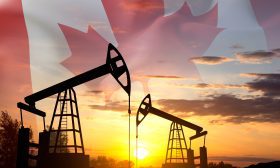
This TAFF initiative in particular will be put to the test of COP politics, even if it’s not on the formal agenda. Twelve months on from its birth in Belém, and seven months since the coalition of nearly 60 countries met in Santa Marta, Colombia, to kickstart work on a global TAFF process, there will be pressure to start turning high-level ambitions into concrete plans. This will mean attention on the Netherlands, which co-hosted Santa Marta with a Colombian government that has since been replaced by a new administration not committed to the initiative, and Ireland and Tuvalu, which will host a “Santa Marta 2.0” in the Pacific next July. These governments will want to show whether their initiative can work alongside the COP process and even restore some faith in the value of international cooperation to tackle global challenges. Other members of the coalition may also face questions about whether their domestic policies match their claims to international leadership: from the UK Government, which will also take on the G20 presidency in 2027, to Canadian and Australia governments, where fossil fuel production policy is moving in a different direction.
Looking beyond COP31, there are still grounds for optimism, whether through existing institutions or coalitions such as TAFF. The possibility, if recent reports are to be believed, that China could host COP33 in 2029 could be a game-changer, another Paris moment for the UNFCCC and multilateralism to demonstrate that it can deliver more than rhetoric. But back in the present, the science is making clear that delaying meaningful action, even now, will only do further harm. As the Belém Declaration on a TAFF spelled out nearly 12 months ago, action needs to be accelerated.
As progressives gather in Antalya, they may therefore do well to keep two overarching priorities at top of mind.
First, revisit the Belém Declaration as a constant reminder that limiting global temperature rises requires a “shared determination to work collectively towards a just, orderly and equitable transition away from fossil fuels”. This work will require, as the Declaration detailed, a focus on economic diversification, reducing structural dependence on fossil fuel revenues and phasing out inefficient fossil fuel subsidies. Progressive policymakers will also need to consider how to support a step-change in finance for the Global South, given the vulnerability of many emerging and developing economies to both the transition and the physical impacts of climate change. The work that has begun since the Santa Marta conference – both in the Santa Marta workplan and the separate but closely linked Brazilian COP Presidency TAFF exercise – will give policymakers the tools to start implementing TAFF in practice. That collective effort can begin in the discussions in and around COP31, even if not yet in the formal negotiations.
Second, one of the most positive developments this year has been the reframing of climate around energy security, risk and resilience. The statement by the UK Prime Minister at the same UNGA week where the UN Secretary-General’s Climate Summit yielded little tangible progress, that “the climate crisis is now a national security threat for countries around the world”, is a sign of an evolving narrative. As is this line from the recent Green Central Banking newsletter: “maybe resilience, for lack of a better word, is a new, pragmatic way to ensure climate action and collaboration still take place in an ever more geopolitically fragmented world.”
COP delegates will also be mindful that they are convening just after the US mid-terms on 3 November.
Many of the underlying conditions (economic, technological and scientific) are in place for governments to make this autumn one of significant progress on climate ambition. The case for framing the transition around economic opportunity and 21st-century energy security is clear. Policymakers may remain cautious in the current geopolitical environment; but this is time to seize the moment.