






























Media Resources
Looking for more information? Here’s everything you should need.
Key Quotes
Ben Scott, report author and Head of Energy Demand at Carbon Tracker, says: “In Brazil, as around the world, the cost of the EV transition is considerably lower than the cost of inaction. Brazil has already successfully transformed its fuel system twice before – first with ethanol in the 1970s, then with flex-fuel in the 2000s. A decisive leap to electric vehicles today could secure Brazil’s economic resilience, environmental sustainability, and global competitiveness for decades to come”
New analysis from Carbon Tracker finds that accelerated EV adoption in Brazil could save up to US$¼ trillion in fuel import costs through 2050. It will also reduce deaths from pollution and avoid billions in climate damages over that timeframe.
The new research highlights imported transport fuels as a growing source of risk to Brazil’s economic and energy security.
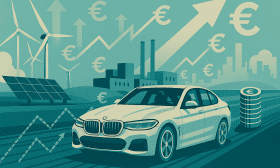
London, 20 January– In 2024, Brazil spent nearly US$10 billion on diesel and petrol imports. Under a business-as-usual pathway, annual import costs could exceed US$30 billion by 2050, increasing pressure on the balance of payments and public finances. In contrast, an accelerated electric vehicle (EV) transition, particularly the adoption of battery electric vehicles (BEVs), would avoid 7.7 billion barrels of oil equivalent (BOE) of fuel consumption by mid-century. This shift would deliver approximately US$¼ trillion in cumulative fossil fuel import savings.
Continued internal combustion engine (ICE) vehicle sales create long-term economic, health, and climate costs. Moreover, Brazil is planning to expand crude oil and refining capacity, which will be costly and faces structural risks from falling oil demand and price volatility, threatening future fiscal returns.
While ICE vehicle dependence is increasingly expensive and risky, the structural realignment of the global automotive market is rapidly reducing risk for BEV investment. China’s rapid manufacturing expansion has helped drive down battery costs more than 80% since 2013. Lower costs, expanding market access and stronger supply chains are creating opportunities for emerging economies like Brazil to benefit from technology transfer and regional value chains, boosting domestic production and sales of BEVs.
Brazil is well positioned to lead this transition, with a low-carbon electricity grid, abundant battery mineral resources and a strong domestic automotive industry. Electricity is already significantly cheaper than petrol, making EVs cost-competitive for consumers – and consumer demand for BEVs is expected to soar as those fuel savings are realised. Brazil’s adoption of flex-fuel (a mix of ethanol and petrol) over the past decades has lowered oil imports but not eliminated fossil fuel dependence in transport; electrification remains the best path to long-term energy security, lower costs, and full decarbonisation.
As well as an economic boon, electrification delivers substantial public-health benefits for Brazil. Reducing harmful air pollutants, including fine particulate matter (PM2.5) and nitrogen oxide (NOx) emissions, could prevent an estimated 1,400 premature deaths and generate US$500 million in cumulative health savings by 2050, easing pressure on public healthcare systems. Carbon Tracker estimates that lower transport emissions are also projected to avoid at least US$75bn in climate-related economic damages by 2050. These include infrastructure damage from extreme weather, productivity losses and crop yield disruption linked to climate change.
Ben Scott, report author and Head of Energy Demand at Carbon Tracker, says: “In Brazil, as around the world, the cost of the EV transition is considerably lower than the cost of inaction. Brazil has already successfully transformed its fuel system twice before – first with ethanol in the 1970s, then with flex-fuel in the 2000s. A decisive leap to electric vehicles today could secure Brazil’s economic resilience, environmental sustainability, and global competitiveness for decades to come”
The report calls on the Brazilian government to implement a co-ordinated BEV policy to unlock economic, environmental, and strategic benefits. It recommends boosting investment in transport electrification, leveraging the political opportunity for Brazil to be a global leader in the energy transition.
Read the full report here: Leapfrog to electric – Carbon Tracker Initiative
Leia a versão em português – aceda à página do relatório em português (PT) e descarregue o relatório em PT.
Notes to editors
Leapfrog to Electric: Brazil: The Economic Benefits of Pro-Electric Vehicle Policy will be published at 00.01 BRT on 20th January
Once published the report can be downloaded at Leapfrog to electric – Carbon Tracker Initiative
Spokesperson: Ben Scott, Head of Energy Demand, Carbon Tracker
For more information and to arrange interviews please contact:
Clemente Gauer, GSCC
Email: clemente.gauer@gsccnetwork.org
About Carbon Tracker
The Carbon Tracker Initiative is a not-for-profit independent financial think tank that seeks to promote a climate-secure global energy market by aligning capital markets with climate reality. Part of the Tracker Group, Carbon Tracker’s research on the carbon bubble, unburnable carbon and stranded assets started a new debate on how to align the financial system with the energy transition to a low carbon future. www.carbontracker.org