
















These are testing times for climate action – which is why Santa Marta is so important
The war in the Gulf has demonstrated once again that the energy system is at the mercy of capricious geopolitics. Clean local energy offers the antidote to this, as ECB Board Member and senior Dutch banker Frank Elderson wrote in an article in the Financial Times on 7 April. Apart from stating that repeated energy shocks – of which the war in the Gulf is the latest – pose a threat to the ECB’s primary mandate of price stability, Elderson’s core message was that the most effective way for Europe to reduce geopolitical risk was to accelerate the clean energy transition. Or to put it another way: the solution to volatile and expensive fossil fuels is not more volatile and expensive fossil fuels.
It is therefore perhaps surprising (and even more so given the uncertainty about when things will settle down in the Middle East and by extension on global energy markets) that many politicians and commentators in Europe and elsewhere continue loudly to lobby for more exploration and production of oil and gas – not only as the quick fix but as the longer-term policy approach.
There is however an alternative view, to be rigorously examined at a landmark international conference co-hosted by the Colombian and Dutch Governments at the Colombian port of Santa Marta on 28/29 April. And Santa Marta feels like it could not be more timely: as the first ever inter-governmental conference specifically to address a roadmap to phase out fossil fuels, so we can stay within Paris warming goals.
These are testing times for climate action. Which is why Santa Marta is significant; not only to demonstrate that international co-operation is alive and kicking; but that practical solutions can be found about how to accelerate the transition – and with many Global North countries recognising their historic responsibilities through their participation.
Politically, Santa Marta can herald a “new multilateralism”, where progressive countries in a coalition of the willing can co-operate on global issues; and crucially that co-ordinated, collective action can show in practice that the whole is greater than the sum of the parts. In the case of Santa Marta, the hope is that this coalition will not only bring much-needed forward movement on climate change, but that it kickstarts a process to complement and reinforce the UNFCCC process. The existing Brazilian Presidency is running its own roadmap process to take back to COP31 in November; but whether they can square the circle of the consensus principle, where large oil and gas producing countries have consistently blocked action on tackling fossil fuel phase-out, remains to be seen.
Although progress remains uneven across regions, the global energy transition is advancing rapidly – driven by falling clean technology costs and electrification. As Carbon Tracker research has shown, fossil fuel producing countries face a future of declining revenues as the energy transition drives down demand. Policymakers must proactively anticipate and prepare for these losses – for it. Anticipating declining export revenues can strengthen fiscal resilience in advance. One lever is to gradually reduce fossil fuel subsidies and responsibly redirecting resources before revenue pressures intensify. Reducing fossil production is not a policy choice – the market will impose it.
Global North oil and gas producers can help show the way with a strategic policy shift to low-carbon energy systems. The UK provides a good example of what can be achieved, and will feature as a case study in Carbon Tracker’s discussions in Santa Marta.
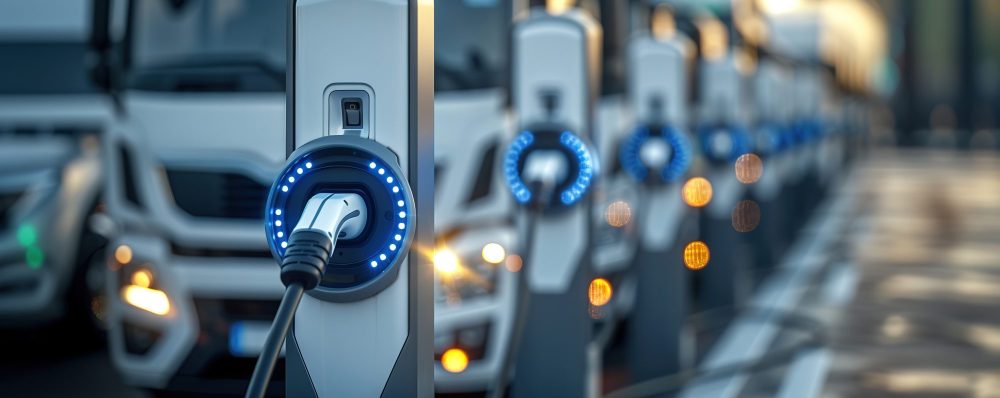
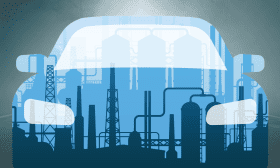
But tackling the risks is only one half of the equation. Santa Marta can also showcase the opportunities for countries to plot a path from a high-carbon to a low-carbon economy. Carbon Tracker’s recent research on Brazil and Colombia shows that an accelerated transition to electric vehicles could save $250bn and $40bn respectively in fossil fuel imports by 2050, compared with a ‘business as usual’ scenario.
Policymakers in Santa Marta will also benefit from innovative ideas on data tools and solutions as experts come together to shape a collective view of what data we have now – and what we still need – to move forward urgently with policies and initiatives on decarbonisation.
In conclusion, the governments meeting on 28/29 April will need to emerge from Santa Marta with momentum. The key will be to create some political space – tough when the eyes of the world are focused elsewhere – to enable a progressive coalition to take forward its work so that Santa Marta becomes both a process and a forum for a step-change in international co-operation on climate and the transition. Traditional economic thinking that the costs of transitioning away from a fossil-free economy will be too great still resides in ministries. This is why partnering with experts from civil society will be vital, to harness imaginative ideas and turn them into meaningful solutions.
Finance and investment, as Frank Elderson emphasises in his FT piece, are vital requirements to securing the transition. Public finance will supply only approximately 25% of the total $5-7trn transition finance required per annum, so it is incumbent on policymakers to create the incentives to scale in the other 75% from private capital. The investment perspective is therefore fundamental, and an important reason why Carbon Tracker is heading to Santa Marta to play our part there.