




















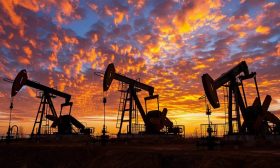



Geopolitical theatre forces an oil sector harvesting cash to confront a political desire for high risk growth, leaving private investors most exposed.
The U.S. move on Venezuela’s oil reserves isn’t a sign of oil industry strength, but a symptom of its predictable disordered endgame.
We are witnessing a fundamental shift: from a 20th-century rush for geopolitical control of fossil resources to a 21st-century geo-political scramble for expensive and stranded assets in a declining industry – providing far more theatre than production.
Iraq 2003 provided a similar narrative: multi-billions of dollars expended for limited production upside, and based on a far better baseline infrastructure for oil and gas production, one which entailed a medium-scale restoration rather than the full-scale recreation needed in Venezuela.
Indeed, the US administration has now called for oil and gas companies to forfeit buybacks and dividends – and instead invest in high-cost and high risk Venezuelan assets for many decades in contrast to their business strategies. This won’t be cheap: Rystad estimates at least $183bn are needed, and at the first meeting between the US administration with oil executives, Exxon’s CEO pointed to a country that is currently “uninvestable” citing “legal and commercial constructs”.
Beneath the headlines of conflict, the cold data reveals that oil companies aren’t manoeuvring for limitless growth, nor to be the last gallant one standing as the world transitions away from fossil fuels. Their aim is far more ordinary. They just want to be a member of a select group still able to pay dividends over the long term.
This reality is etched in four irreversible industry trends that contradict the rhetoric of endless demand, and aggressive growth ideas: the capex ceiling, the end of exploration, credit downgrades and consolidation (the antithesis of growth).
Let’s take it one step at a time. First we have the capex rationalisation: leaner levels of investment are sufficient to maintain a production plateau. It is not a signal of growth, but of sufficiency.
Global upstream oil and gas capital discipline has been the mantra of the industry. Investment has fallen from the nearly US$900bn a year that we saw in the investment super-cycle peak of 2014-2015 to a steady US$550-600bn a year.
Crucially, the cash flow stream that has been freed up by disciplined capex has not been used to expand the resource base, but to reward shareholders through dividends and buy-backs – the classic behaviour of a mature, cash-cow industry, not a growth one.
Exploration is reaching an end. Global exploration spending has fallen by around 60% over the past decade, with most majors allocating less than 10% of upstream budgets to new exploration. BP’s large find in Brazil may seem an exception – but it proves the rule: these step-out projects will take 10-15 years to reach first oil and are more ornamental than truly productive and profitable options, given a 2040-and beyond world unlikely to need them.
Credit rating agencies are listening to the numbers, not the speeches. S&P and Fitch have downgraded the sector outlook, with specific corporate downgrades following new project sanctions. Woodside’s recent negative outlook revision, triggered by a single long-term, high-cost, LNG investment, is a canonical example. The market increasingly treats major new greenfield fossil fuel projects as potentially stranded from the day they are announced.
The rise of consolidation. The fast uptick in industry merger and acquisition activity (Exxon-Pioneer, Chevron-Hess, and so on) also indicates a sector where many under-performing assets are not stranded directly but indirectly via absorption by more powerful corporate operators. This is not production growth; it is financial engineering – shuffling existing assets to cut costs and maintain dividends, and certainly not to expand a resource base, which the industry instinctively knows is not needed.
Adding to these clear markers of an industry aware that it is in decline, the pillars of oil demand growth are crumbling in real-time, and irrespective of price.
- The end of transport growth. Global gasoline demand is set to peak in 2025. The reason is electrification. China, now a dominant “electrostate” is exporting cheap EVs and renewable tech globally, irrevocably altering the oil-intensity of transport. This isn’t a future prediction; it’s a present-day reality as EVs are on track to displace 4-5 million barrels per day of demand by 2030.
- China’s dual peak. China’s own oil demand growth is declining. Simultaneously, its power sector emissions are widely expected to have peaked as renewables push coal’s share of generation to below 50% – a stunningly fast transition that undermines the core assumption of endless Asian fossil-demand growth.
- Limited growth levers. The industry clings to petrochemicals and aviation and, most recently, LNG as future growth drivers. Yet, these sectors cannot possibly offset the sweeping declines in road transport and power generation. They are a fleeting respite, not a revolution. As for LNG, the industry has already committed excessive capital in its dash to go global on gas. Further expansion not only risks new capital but will sacrifice the cashflows of sanctioned projects that depend on sustained prices to meet hurdle rate returns.
- Capital flight to the new system. While oil and gas capex stagnates, annual investment in renewables, grids, and electrification, at over US$2.2 trillion per annum, is more than double fossil-fuel supply investment. The market is already building the post-oil energy system, recognising that fossil fuels, while important, are a diminishing part of a very new and different, larger energy mix.
Geopolitical turmoil can make it challenging to see clearly the underlying market dynamics, but the direction of travel has been set for years. The industry is no longer led by multi-billion, high-risk engineering mega-projects, but by sober capex reduction, and cash-flow diverted into investors’ pockets. What investors should see in Venezuela is not opportunity, but the reminder that in today’s oil market, a single political decision can force investment into assets that will take decades of stability to pay back, or, far more likely, end up stranded.
A longer version of this analysis is available here.
This article was originally posted on Backchannel, access it here.