






























The closure of Investors for Paris Compliance has prompted renewed debate about whether investor pressure on climate ever really mattered.
Critics argue that shareholder resolutions rarely succeeded, that companies continue to produce oil and gas, and that governments and state policies ultimately matter more than investors.
There is truth in some of those observations. But they also miss where investor influence is most visible.
The strongest evidence is not found in annual general meetings. It is found in capital allocation.
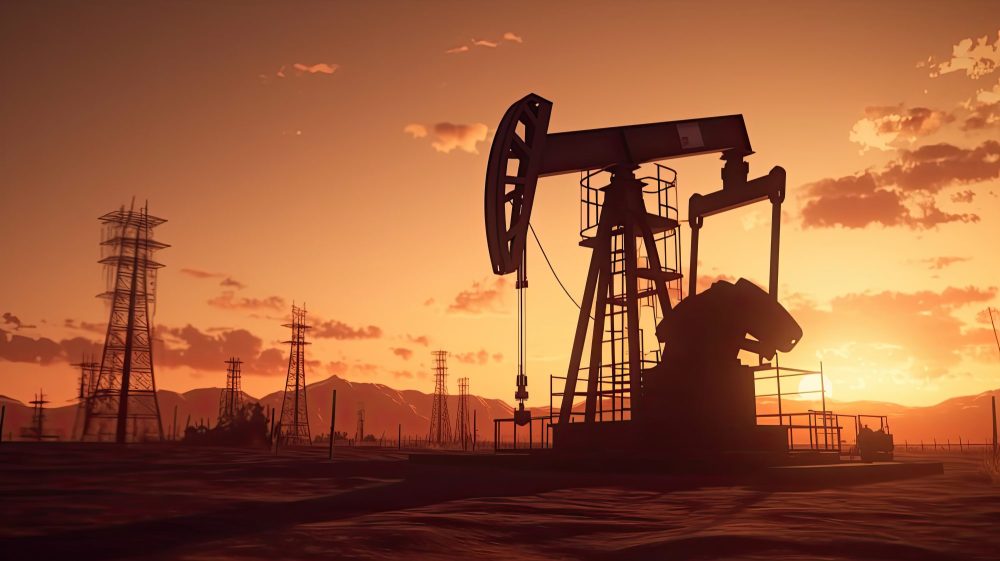
Geology dictates what is in the ground. Capital expenditure dictates what comes out.
For decades, oil companies were rewarded for growth. Investors celebrated reserve additions, production increases and large-scale project development. The assumption was simple: future demand would be higher than today, so more reserves meant more value. Over the past decade that assumption has become far less certain.
Investors began asking different questions. What if oil demand growth slows? What if electric vehicles scale faster than expected? What if renewable power becomes cheaper? What if some reserves prove less valuable than markets assume?
Carbon Tracker’s work on stranded assets, our analysis of whether O&G production plans aligned with IEA net-zero scenarios, helped bring these questions into the mainstream of investor debate. Divestment campaigns and broader climate narratives reinforced them.
As confidence in future demand weakened, investors became less willing to fund growth at any cost. Demand uncertainty, a wider climate context and declining confidence in long-dated projects helped shift investor priorities towards capital discipline, a theme we set out in Carbon Tracker’s landmark report Blueprint for an Energy Transition in 2015. As investors increasingly prioritised capital discipline over growth, behaviour across the sector started to change.
Following the shale boom, oil companies were pushed to prioritise free cash flow, dividends and share buybacks over aggressive expansion. This shift is now visible across much of the listed oil industry: reserve replacement rates have fallen, exploration spending has declined, shareholder distributions have risen, and consolidation has accelerated. Many companies increasingly resemble mature cash-generating businesses rather than growth businesses.
In 2023 Goldman Sachs noted that since 2014, “concerns around future demand and stranded assets had contributed to a sharp reduction in oil industry resource life, which it estimated had fallen from more than 50 years in 2014 to around 23 years.”
Whether one agrees with every aspect of that analysis is almost secondary. Even critics of climate-focused investing increasingly acknowledge that investor expectations changed.
The question is not whether investor pressure worked. If investor pressure had no influence, we might expect companies to continue pursuing reserve growth as aggressively as they did during the commodity supercycle.
A more searching question is: if projects became more economic, why were fewer sanctioned? And why did reserve life continue to fall?
The answer lies at least partly in changing investor preferences and expectations, as well as better knowledge of the risks involved.
At the same time, the debate itself has evolved.
Ten years ago, much of the discussion revolved around scenarios, forecasts and long-term climate targets. Critics could dismiss these as hypothetical.
Today the transition is increasingly observable. Decreasing oil company capital expenditure is measurable. Declining reserve replacement is measurable. Rapidly increasing buybacks and dividends are measurable. And on the other side of the ledger, surging electric vehicle sales are measurable. Global-scale industrial wind and solar deployment is measurable. Battery manufacturing is growing at exponential rates.
The argument is becoming less about what might happen and more about what is already happening.
Investor pressure by itself will rarely determine the outcome. But it helped change what investors considered valuable. And when investors change what they value, companies eventually change how they behave.
The balance sheets and capital allocation decisions of the oil industry suggest that the process is already under way.
That does not mean the work is finished. As transition trends become more visible, debates increasingly focus on what those trends mean for competitiveness, industrial policy, security and investment decisions. The risk is not a lack of evidence, but a failure to respond to it.
To hear more about the evidence, read our ‘Quiet Retreat’ and our interview on the topic with Christiana Figueres on Outrage & Optimism.